



The boxes are stacked by the door. The lease ends Friday. Somewhere in the back of the apartment, a shade is opening on its schedule, the way it has every morning for two years, and you’re standing in the kitchen wondering what you’re going to do about it.
The thing nobody warns you about is the small, slow accumulation of upgrades you've made to a place that was never really yours. The smart thermostat wired into the HVAC. The smart deadbolt that replaced the original lock. The hardwired video doorbell. The motorized shades. Things you bought because they made daily life better, and now have to decide what to do with them.
For most of these things, the decision is the same: they stay. Either because they’re wired in, or because removing them would cost more than they’re worth, or because the next tenant gets to inherit your taste in lighting. You take the couch. You leave the smart home.
RYSE is an unusual exception.
Friday Morning: The Takedown
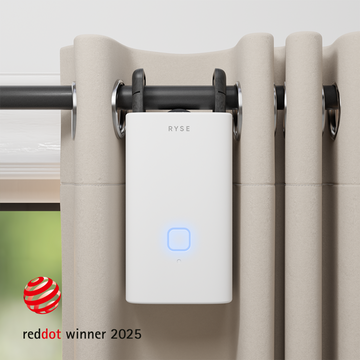
The takedown takes longer to explain than to do. The device clips off the chain in a few seconds. The bracket comes off the wall, sometimes none, depending on how it was mounted. The battery pack detaches. The whole thing fits in a shoebox. If you put it back in the original packaging, you don’t even need a shoebox.
This isn’t an accident. RYSE was designed this way on purpose. The detachable battery, the bracket-mounted hardware, the chain-driven mechanism that doesn’t require modifying the shade itself, every one of those design decisions adds up to a product that was never asking to live in your wall permanently.
- Rahul T. “Have it installed in every room in the house. Better than other companies, it has a detachable battery that can be charged without running wires everywhere.”
Rahul installed RYSE in every room of his house and never ran a wire to do it. That’s not just a clean look. That’s a feature you understand better the day you decide to move. Nothing has to be fished out of the wall. Nothing has to be repatched, repainted, or explained to a landlord at walkthrough. The wall looks the way it did the day you signed the lease.
The Week In Between
There’s a gap, of course. Two days, sometimes a week, where everything is in transit and nothing is set up. The apartment you’re leaving has nothing on its windows. The apartment you’re moving to has whatever the previous tenant left—maybe blinds you would have picked, maybe not. The shades are open until you remember to close them, then they stay closed. You pull the chain like a person from a previous era. It feels archaic in a way you’d forgotten was possible.
This is the moment a lot of people understand what they actually had. Smart shades aren’t about technology. They’re about not thinking about your shades. The week between moves, when you’re thinking about them constantly, is when the absence registers.
And then you remember: it’s in a box. In your car. In the moving truck. Wherever it is, it’s yours. The week is temporary.
Arrival: New Apartment, Different Windows
The new apartment has different windows. Floor-to-ceiling, maybe. Or smaller than the last place, with weirder angles. The shades that came with it are heavier than what you had before, or lighter, or longer, or shorter. You stand in the living room with the box from the moving truck and try to remember whether you’re going to have to buy something new.
You don’t. RYSE doesn’t care what shades the new apartment came with, as long as they’re chain-operated—which most of them are, in most apartments, in most cities. The same units that worked on your last set of windows will work on these. The customers who’ve done this discovered it the same way you’re about to.
- Stuart b. “I love my Ryse! Installation was a breeze. I moved in to a new apartment with great full wall floor to ceiling windows with a single shade in each room. I was concerned that it would not be able to handle the large heavy shades but it works like a charm.”
- George C. “I recently moved into an apartment with heavy shades, so Ryse SmartShade products were perfect. The BatteryPack was especially useful since there were no outlets available.”
- CRAIG A. “Just moved to an apartment with amazing harbor views and 8 floor to ceiling windows… Ryse let me adapt the existing blinds to open in groups!”
Stuart was worried about heavy floor-to-ceiling shades. They worked. George moved into a place with no nearby outlets and the battery pack covered him. Craig had eight oversized windows and a view that suddenly mattered, and he automated all of them. None of them bought new RYSE units for the new apartment. They brought the ones they already had.
Saturday Afternoon: The Reinstall
Twenty minutes per window, give or take. The first one takes the longest because you’re reorienting yourself, the chain on this shade hangs differently, the bracket lines up at a slightly different height. By the second window, you’re moving faster. Third, it’s muscle memory.
- Margaret M. “The installation only took about 20 minutes. Instead of having to pull the chain, I just use the app on my smartphone and it works perfectly.”
- Michael H. “Took a leap of faith and ordered two. Easy to install (you don’t even need a power drill), easy to set up, and had them both working and synced in ~20min.”
Margaret’s twenty minutes was the first time. Michael’s twenty minutes was for two units. By the time you’re reinstalling for a second apartment, the number is lower. You’ve done this before. The brackets are familiar. The app is the same app that’s been on your phone the whole time. Nothing is being learned from scratch.
The Part Nobody Expects: Your Routines Are Still There
Here’s the part that surprises people. You don’t set anything back up.
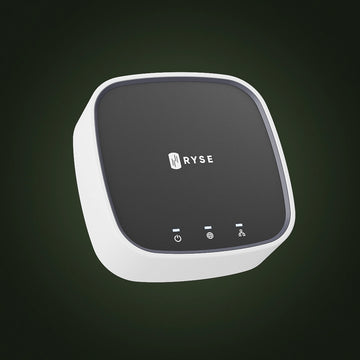
If you have the SmartBridge, you connect it to the new Wi-Fi network. You reinstall the SmartShade on the new chain and reset the open and close positions so it knows where the new window starts and stops. That’s it. The schedules you’ve perfected—the 7am open, the sunset close, the weekday-versus-weekend logic, the room groupings, the device names, the shared access for your roommate or partner, your login—all of it is exactly where you left it. Nothing has to be rebuilt.
If your devices are paired over Bluetooth instead, it’s even faster. Reinstall the device, reset the open and close positions, and you’re running.
The first morning in the new apartment, the alarm goes off, and so do the shades. The same way they did at the old place. At the same time. The same gradual fill of light. The first time it happens you almost don’t notice it, which is exactly the test, the smart home you can take with you is the one you stop noticing.
- Sean M. “Through the bridge, I just set up a routine to open in the AM and close in the evening. Now it just does its thing. It may be the best home purchase I’ve made in years.”
Sean’s line lands differently when you read it after a move. “It may be the best home purchase I’ve made in years” isn’t about the gadget. It’s about the fact that the routine is still running, in the same form, in a different home. That’s the thing nothing else in the smart home category does.
Why It Worked: The Quiet Logic of a Retrofit
There’s a quiet truth underneath all of this that people sometimes miss. The reason RYSE moves with you is the same reason it was attractive in the first place: it’s a retrofit. It works on the shades that are already there. It doesn’t replace the shade itself, it adds a brain to it.
That’s why customers who priced out the alternative—custom motorized shades, hardwired motors, full replacements—ended up walking away. Built-in solutions assume you’re building for a property you own. Retrofits assume your situation might change.
- Larry K. “I absolutely love my Ryse shade system. Was quoted from the shade company $3500 to install two motors. No way!”
- Larry S. “5 of these for the same price as one high priced built in motorized shade.”
- Larry K. was quoted $3,500 for two custom motors. Larry S. did the same math from another angle, five RYSE units for the price of one built-in motorized shade. Both of them ended up with smart shades. But more importantly, both of them ended up with smart shades they could take with them.
Custom installations were never bad products. They were just designed for a different kind of life. A retrofit assumes the apartment, the job, the city, the situation might all change. RYSE was built for that version of the world.
A Few Weeks Later
A few weeks into the new apartment, the boxes are gone, the kitchen is sorted, the couch is in roughly the right spot. The shades open in the morning and close at sunset. You’ve stopped noticing them again. The apartment feels lived-in. The routines are running. The login is the same login. The schedule is the same.
If you move again next year, or in five years, you already know how this part goes. The device clips off the chain. The bracket comes off the wall. The battery pack detaches. The wall looks the way it did the day you signed the lease.
And in the next apartment, on the next set of windows, the same routine starts up again. Same time. Same gradual fill of light. Same RYSE that’s been with you the whole time.
The best smart home upgrade is the one that’s still yours after the moving truck pulls away.


